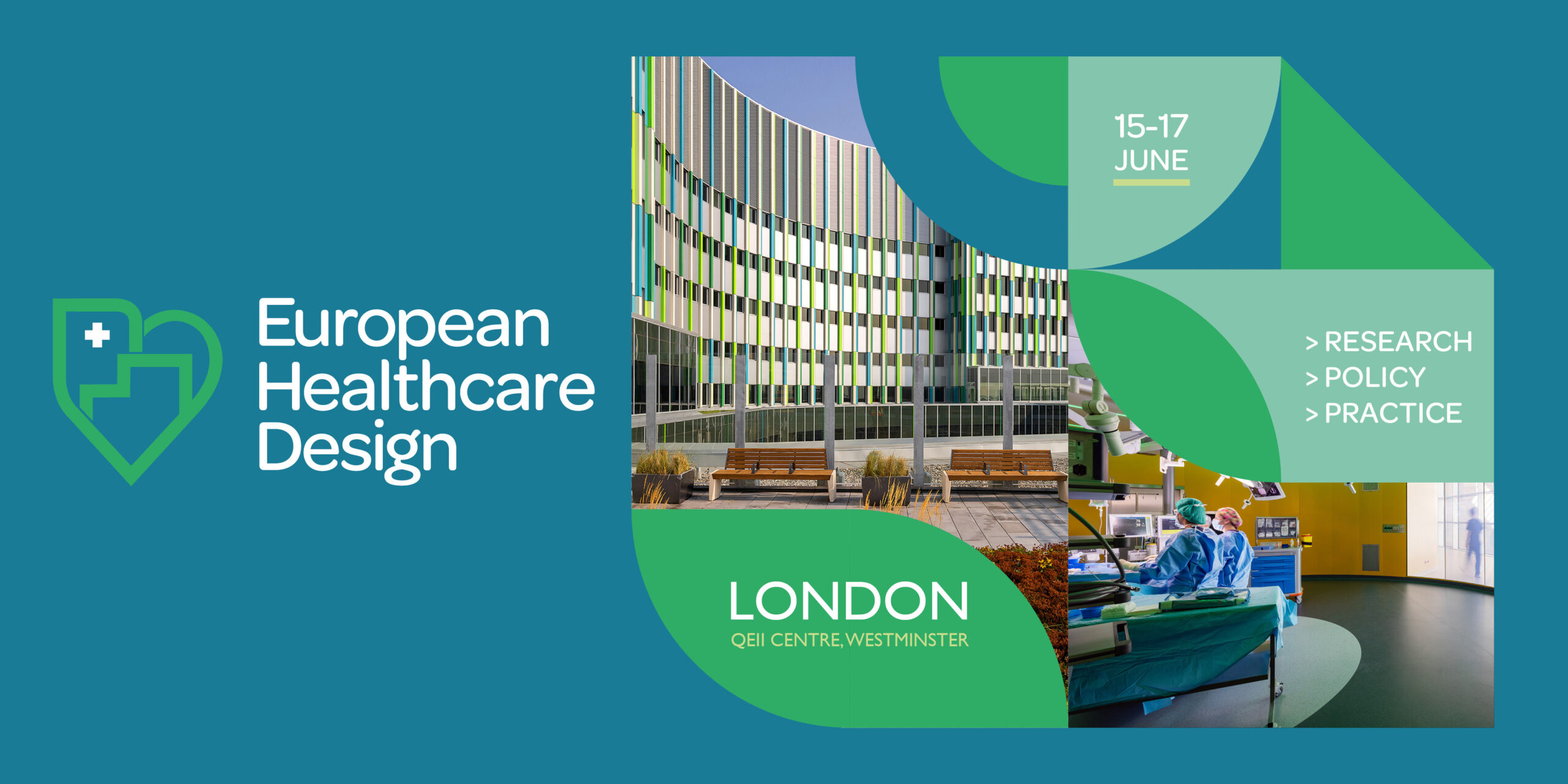
European Healthcare Design 2026
Agile not fragile: Designing for resilience, renewal and regeneration
2026 marks the 12th year of the European Healthcare Design 2025 Congress (EHD)
EHD represents a highly successful partnership between Architects for Health and the wonderful team at SALUS Global Knowledge Exchange.
AfH are delighted to provide the Programme Chair, responsible for writing the vision statement for each congress and leading the committee that selects successful submissions.
Since 2016, EHD has been held annually in June at the Royal College of Physicians in Regent’s Park. This year, we made the move to the QEII Centre in Westminster in order to facilitate the expansion of our in-person event and allow for up to 800 delegates in person.
The closing session of the second day features the annual EHD Awards presentations, covering categories such as healthcare design, mental health, research, innovation, design for health and wellbeing. Awards are presented by AfH Chair, Jaime Bishop.
Winners of the design categories are invited to make a presentation of each of their schemes at ‘Design Matters’, an event run by AfH and held every September, enabling AfH members to enhance their knowledge of the successful schemes.
Currrent members of AfH enjoy a discount on tickets purchased in advance of the event.


2026 Congress themes
Population health: From hospital to community, and treatment to prevention; ecosystem approaches to integrating care and fostering healthy communities
Health planning and investment: New service, funding and asset models that promote equity, quality improvement and strengthen health system resilience
The intersection of design and clinical medicine: Adaptive and humanistic environments and spaces to support clinical service planning strategies
Science, technology & digital transformation: Whole system-level adoption of digital health, AI, personalised medicine and smart hospital innovations
Climate-smart healthcare: Applying circular economy principles and net–zero carbon strategies to services and infrastructure
Art & architecture: Design at the human scale to promote wellbeing, identity and dignity, support recovery, and empower patients and staff
Tertiary care: Integrating specialist services and infrastructure, including mental health services, cancer care, women and children, and rehabilitation
Workforce design: Strategies to create supportive work environments that promote staff well-being, improve work performance, and enhance retention.
AfH Networking Area
The Architects for Health Networking Area features panel discussions and conversations across the two-day conference, curated under four workstreams: Knowledgeshare, Best Practice, Strategic Engagement, and Fostering Future Talent.
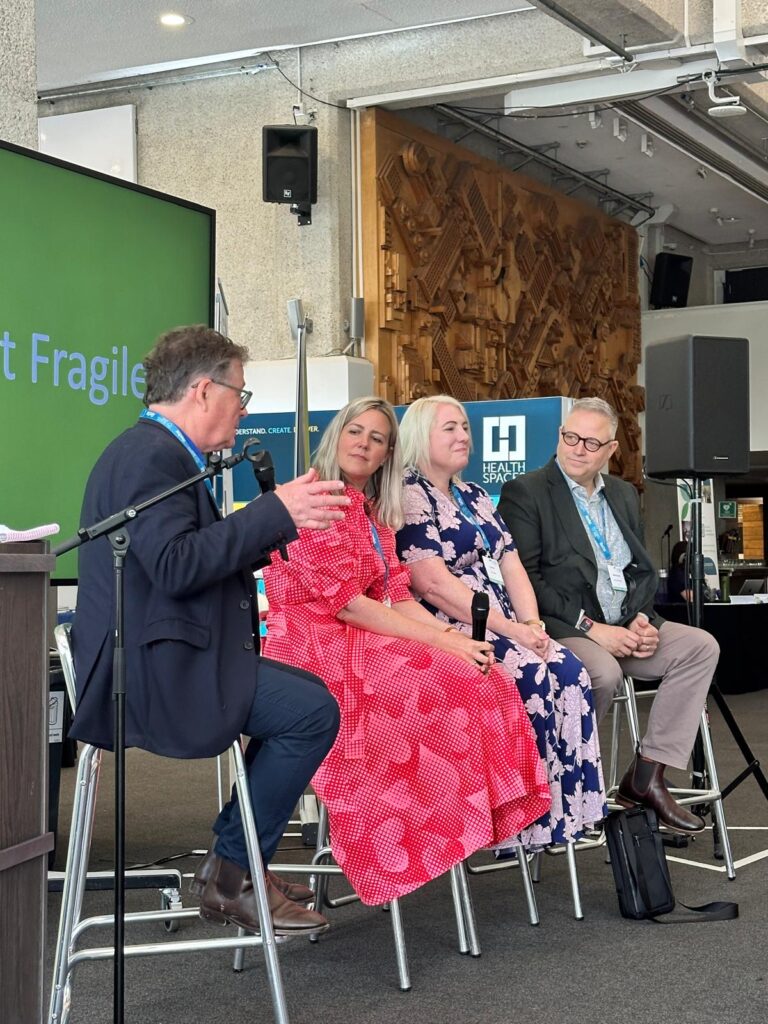
Session 1: Agile not Fragile
Does centralisation solve the problem – or does decentralisation deliver better healthcare outcomes for all?
Chair: John Cooper, President, Architects for Health
Panelists: (left – right)
- Charmaine Hope, Chief Estates and Facilities Officer, Buckinghamshire Healthcare NHS Trust
- Fiona Daly, National Deputy Director of Estates and Director of Estate Sustainability and Workforce, NHS England
- Matthew Custance, Partner, Burram River Advisory
Read the session summary
Session 1: Agile, Not Fragile
Centralisation vs. Decentralisation in NHS Estates
A panel discussion recorded live at the European Healthcare Design Conference 2026 | Audio available below
Overview
In this lively, podcast-style opening session, AfH President and session Chair, John Coopers, sets aside the usual conference formalities for something more candid: a frank, occasionally provocative conversation about who should hold the reins on NHS capital investment — the centre, or the trusts themselves. Taking the New Hospital Programme (NHP) as the starting point, the panel ranges across delivery models, political leadership, risk appetite, and the future shape of neighbourhood health infrastructure.
Joining the discussion are three panellists with deep, complementary experience of NHS estates:
- Charmaine Hope — Chief Estates and Facilities Officer, Buckinghamshire Healthcare NHS Trust
- Fiona Daly — National Director for Sustainability and Workforce, and National Deputy Director of Estates, NHS England
- Matthew Custance — Partner, Burram River Advisory, with a long career advising the NHS on financial and commercial strategy
Key Discussion Points
Is centralisation delivering? The chair opens with a challenge: eight years into the New Hospital Programme, delivery has been slow, and there is little historical evidence that centralising funding, design and construction actually saves time or money. He contrasts this with his own experience delivering a large, complex cancer hospital in under four years under PFI — raising the question of whether the current model has overcomplicated something the sector once did well.
Lessons from PFI and the Independent Sector Treatment Centres Matt Custance offers a historical comparison: PFI was a decentralised, trust-led model with light central standardisation, while the Independent Sector Treatment Centres programme was tightly centralised. Both delivered results — but both were also backed by strong, sustained political leadership. He argues that today’s NHP has taken the harder of the two delivery models without the equivalent political weight behind it.
A case study in agility Charmaine shares Buckinghamshire’s own experience of choosing not to wait for national programme funding. By blending central funding with commercial partnership, holding onto risk rather than transferring it, and compressing traditional design and approval cycles, the trust moved from appointing its project team to breaking ground within months — with first patients expected in 2027.
Balancing standardisation with flexibility Fiona Daly makes the case for a middle path: some standardisation (from hospital doors to procurement) genuinely drives value, while capital planning needs to move toward multi-year settlements, phased funding, and a clearer national picture of “core, flex and tail” estate. She also highlights how far the sector’s underlying data and short-form business case processes have improved.
A culture of caution The panel turns to culture as much as structure — noting that business case approval processes have long rewarded caution and risk-avoidance over pace. Several speakers reflect on how the PFI and ISTC era instead asked “why is this late?” rather than “what could go wrong?” — and consider what it would take to shift that mindset back.
Beyond the hospital gates Discussion broadens to neighbourhood health centres, community diagnostic centres, and the role of local authorities and the high street — with examples of NHS services successfully regenerating town centres. The panel also debates whether the NHS should continue funding infrastructure, such as roads, utilities and energy plants, that arguably belongs to the wider civic environment, and calls for longer-term, more ambitious master planning of NHS land.
Should trusts wait, or act? Closing the session, all three panellists agree: trusts should not sit and wait for national programme funding. Instead, they advocate a case-by-case, risk-aware approach — using the current strategic clarity around available funding streams to prioritise wisely, while still protecting long-term investment in core estate.
Session 2: Knowledgeshare
This session will explore three key facets of healthcare design: creative health, neighbourhood health, and mental health. Beyond the bricks and mortar, what do we as designers need to do to deliver spaces that support patient and staff wellbeing, enhancing recovery and care?
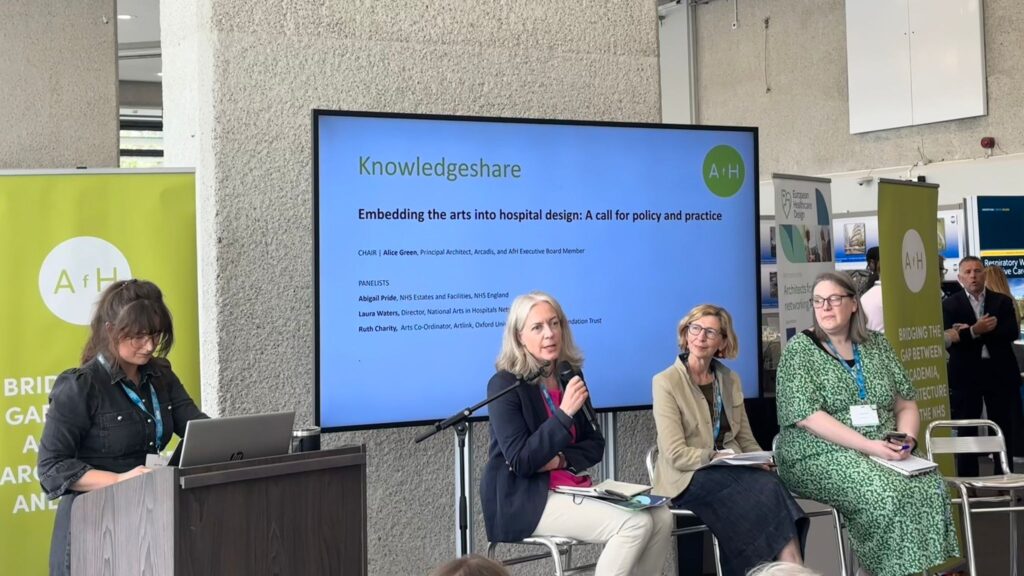
Session One: Embedding the Arts into hospital design: A call for policy and practice
Chair: Alice Green, Associate Principal Architect. Arcadis
Panelists: (left – right)
- Laura Waters, Director, National Arts in Hospitals Network (NAHN)
- Ruth Charity, Arts Coordinator, Artlink, Oxford University Hospitals NHS Trust
- Abigail Pride, NHS Estates and Facilities
Read the session summary
Session 2A: Embedding the Arts into Healthcare Design from the Outset
A panel discussion recorded live at the European Healthcare Design Conference 2026
Overview
Hosted by Architects for Health in partnership with the National Arts in Hospitals Network, this panel session brought together arts and health specialists, an NHS estates leader, and NHS England’s senior technical guidance manager to explore why creativity should be built into hospital design from day one, rather than added on at the end.
Chaired by architect and interior designer Alice Green, the discussion covered the evidence base for arts in healthcare, the practical barriers preventing wider adoption, and the policy levers that could help embed creative health into the NHS New Hospital Programme.
The Panel
- Laura Waters, Director of the National Arts in Hospitals Network and Head of Arts at University Hospitals of Derby and Burton NHS Foundation Trust
- Ruth Charity, freelance curator and public art and health consultant, with 19 years leading the arts programme at Oxford University Hospitals NHS Foundation Trust
- Abigail Pride, Senior Technical Guidance Manager at NHS England
Key Themes
The evidence is no longer in question. Panellists pointed to decades of research — from Ulrich’s landmark 1980s work on views of nature and recovery, to more recent studies on sensory design, dementia, neurodiversity, and staff burnout — showing that a well-designed environment measurably supports patient recovery and wellbeing. As one panellist put it, aesthetic deprivation isn’t neutral; when the arts are absent, the impact on recovery is actively negative.
The real challenges are structural, not evidential. Speakers identified several recurring barriers: a shortage of trusts with dedicated arts expertise; “percent for art” policies that exist on paper for only a small fraction of trusts and are often the first line cut when budgets tighten; arts strategies written without ring-fenced funding attached; and a lack of top-down leadership commitment, leaving arts managers to advocate from the bottom up.
Early involvement changes what’s possible. A strong theme throughout was that bringing artists in at the earliest design stages — before pen touches paper — allows creative input into colour strategy, wayfinding, and material choices at little to no extra material cost, since these are things trusts must purchase anyway. Case studies included a colour strategy for a new surgical building and an illustrated ultrasound suite that transformed children’s willingness to attend appointments.
Policy momentum is building. Panellists welcomed the emergence of an NHS executive lead for the arts, growing interest from DCMS and the Department of Health, and NHS England’s ongoing updates to Health Building Notes and Health Technical Memoranda, which increasingly signpost arts and therapeutic design evidence. The New Hospital Programme and its modular build approach were flagged as a critical, time-limited opportunity to mandate creative health standards before designs are locked in at scale.
Language and metrics matter. Several speakers suggested reframing “arts” in NHS-friendly terms — such as “atmospherics” or “environmental enrichment” — and connecting outcomes to language finance directors respond to, such as return on investment, staff retention, and reduced length of stay. The forthcoming inclusion of arts metrics in the Treasury Green Book was cited as a significant step toward standardised, government-recognised figures for social return on investment.
A moral responsibility. The session closed with a call to action: architects and designers carry a responsibility to embed creativity into healthcare buildings from the outset, and the panel urged attendees to collaborate across disciplines and challenge commissioning norms to make this the standard, not the exception.
Kindly sponsored by: